The role of the puzzle
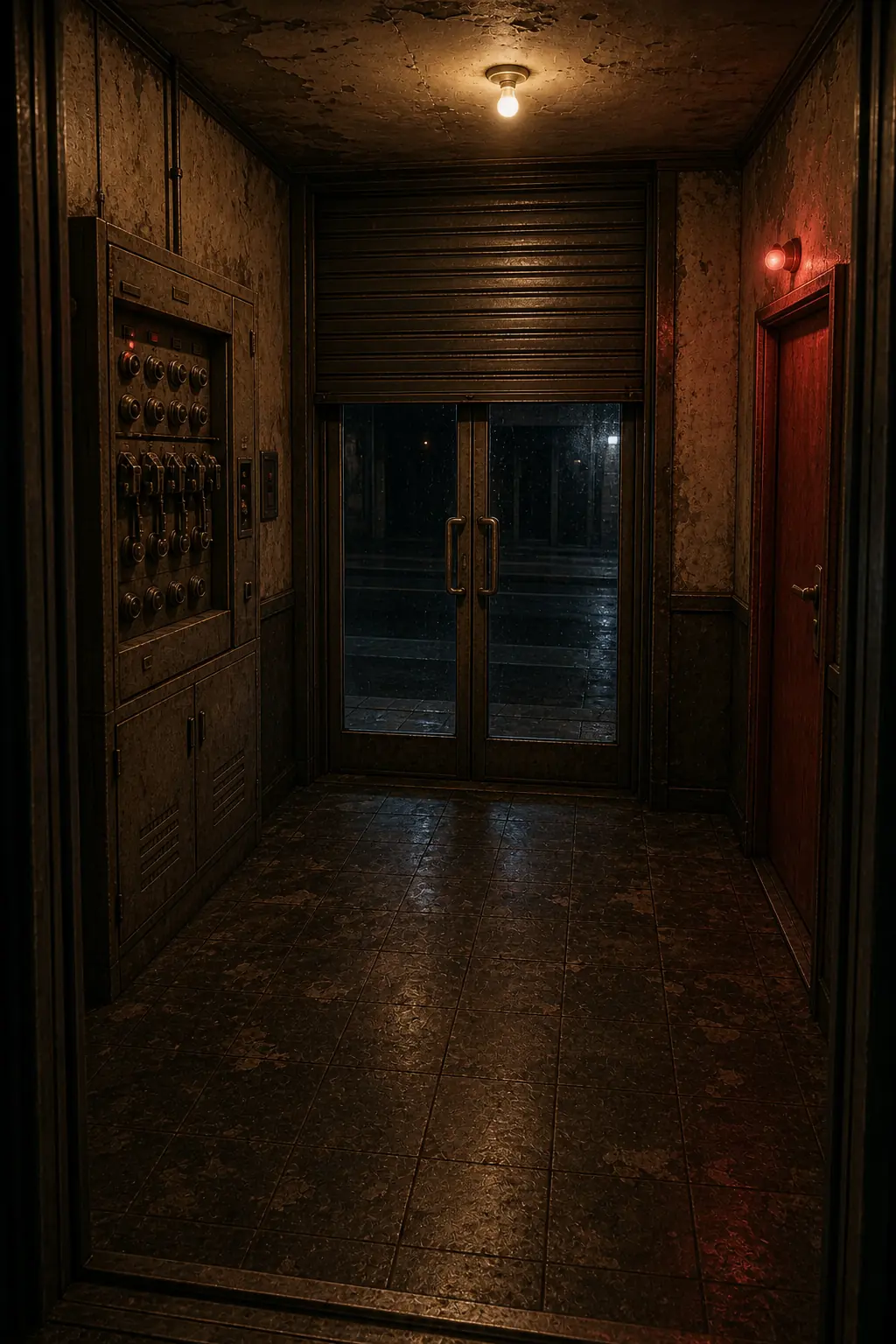
The final wiring board is not an isolated minigame. It routes power to the front shutter. The player collects red and blue wires in the records room and lobby, then repairs the broken circuit behind the front desk. Completion must visibly raise the steel gate in the main scene and open the next action.
The early version used small colored points that blended into the background on mobile. Inventory entries were text-only, making the two wires difficult to remember. We added dedicated item images and distinguished the wires by terminal shape and position as well as color.
One input, one response
Some wiring taps produced two rapid interface sounds. A touch event and the click generated after it were both handling the same action. We unified the path around pointer events and play feedback only when movement begins.
Transparent hit areas are wider than the visible terminals because a finger covers the line on mobile. We measured the coordinates again to prevent neighboring targets from overlapping. A wrong placement produces a circuit-failure cue and a correct connection uses a short confirmation, so the result remains legible without relying on color alone.
State change and sound
The shutter sound no longer plays when a wire is selected. It begins only when every connection is complete and the steel gate starts moving in the main image. The success cue is short and the motor remains low so the two layers do not compete. Investigating the locked gate uses a solid metal impact rather than a doorknob sound.
The basement failure route starts its gas release immediately by trimming silence from the source file. Success and death involve the same equipment but use clearly different sound and visual changes, preventing the player from misreading the outcome.
Testing and result
We repeated select, drag, swap, and complete actions with a desktop mouse and phone-sized Android and iOS input. Tests include fast double taps, using each wire from inventory, and restarting the stage to confirm that every connection returns to its initial state.
The board now communicates through color, terminal shape, and sound. Completion is seen and heard in the room itself before the route continues to the exit key. The same input rules now form the baseline for future drag-based puzzles.
Related records
The wiring board combines room navigation, inventory, and layered feedback. The mobile controls in the play guide and the sound devlog explain the surrounding design decisions.