How sounds are selected
ROOM 404 prioritizes the material and result of an action over sheer horror volume. A locked guest door uses a rattling handle, a steel gate uses a heavy metal impact, and a screwdriver uses short thread friction. A file is rejected when its object or material does not match the scene, even if its title seems correct.
Free recordings are often long and contain unusable openings or tails. Playing the whole source masks the next popup and makes input feel delayed. We keep only the useful impact or friction, move the start forward, and review it again among the other effects in the game.
Editing for immediate playback
Password keys, door keys, screwdrivers, the extinguisher, and guest doors must respond at the press. We remove both digital silence and weak leading waveform. Footsteps are reduced to the few steps needed for a transition, while the extinguisher keeps its first spray and removes the unwanted second burst.
Identical actions share one sound across stages. Password input and failure, keyed doors, and screwdriver use run through common playback paths. The failure beep remains audible over ambience but is slightly reduced so repeated mistakes do not become punishing.
Room-state layers
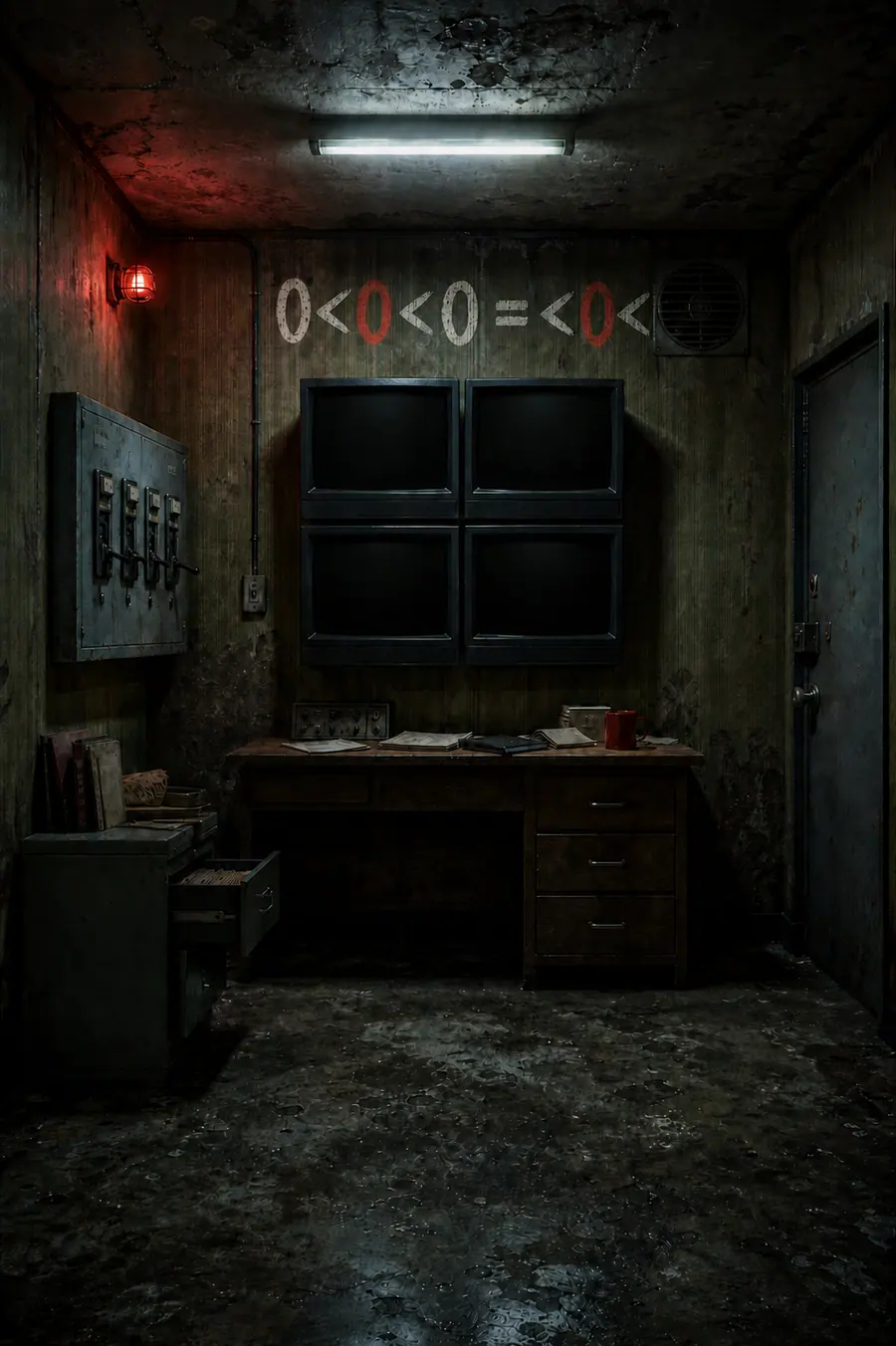
During the control-room blackout, only ceiling drips remain. Restoring power adds fluorescent noise and a very quiet ventilation hum. Breaking the lamp removes only its layer, while opening the vent stops only the machine. Television power is handled independently.
A dark ambient track connects all five stages at low volume. It must not cover password keys, indicators, or locks. Water and ventilation are independently controlled because they explain the room, and a visible speaker control lets the player mute or restore the complete mix.
Duplicate playback on mobile
Touch devices can generate both touch and click events, producing two sounds from one press. A common interface cue could also overlap a puzzle-specific effect. We unified event handling and exclude controls with meaningful effects from the generic tap path.
Browsers restrict autoplay before a user gesture. Selecting a character or pressing the first travel button becomes the audio activation point. Playback failure never blocks progress and activation can be retried on the next input.
Review result and attribution
Each effect is tracked with its source URL, scene, edit range, and volume. We review on headphones, desktop speakers, and phone speakers through the test deployment. Ambience should keep the room alive without competing with an input that must be recognized immediately.
Sound now acts as a state display rather than decoration. A player can hear restored power, an unlocked door, or a failed input without staring at the interface. Source and license records for the selected free recordings remain in the production archive.